
Polybutylene, galvanized or repeated leaks? When to repair, when to repipe, and what the job involves.

Nobody wakes up wanting new pipes. People land here after a leak, or a few of them, or after an insurance inspection asked a question about their plumbing. Start with the one that sounds like you.
You've had more than one leak, or the water looks or flows wrong. The signs that a house is running out of patience with its pipes.
You think you have polybutylene or galvanized pipe. What they look like, and why they matter.
An insurance inspection flagged your plumbing. What the 4-point form asks, and what you can do about it.
You're not sure whether to repair or repipe. How we make that call, and when one repair is enough.
Someone already quoted you a repipe. We'll review it with you for free.
If water is leaking right now and you can't stop it, shut off the main and call (941) 778-0773. The longer conversation can wait until the water is off.
Pipes rarely fail all at once. They tell you, slowly, in ways that are easy to write off one at a time. Put together, these are the signs worth taking seriously:
One of these on its own is usually a repair. Several at once, or the same problem coming back, is the point to ask whether the pipe itself is the problem.
Polybutylene is a gray plastic water supply pipe that went into many Florida homes built from the late 1970s to the mid-1990s. It was cheap and easy to install, and it's one of the materials the 4-point insurance inspection asks about by name. You'll usually see it where the lines come out of the wall at the water heater, or under the sinks. If you're not sure what you're looking at, a plumber can tell you in a minute.
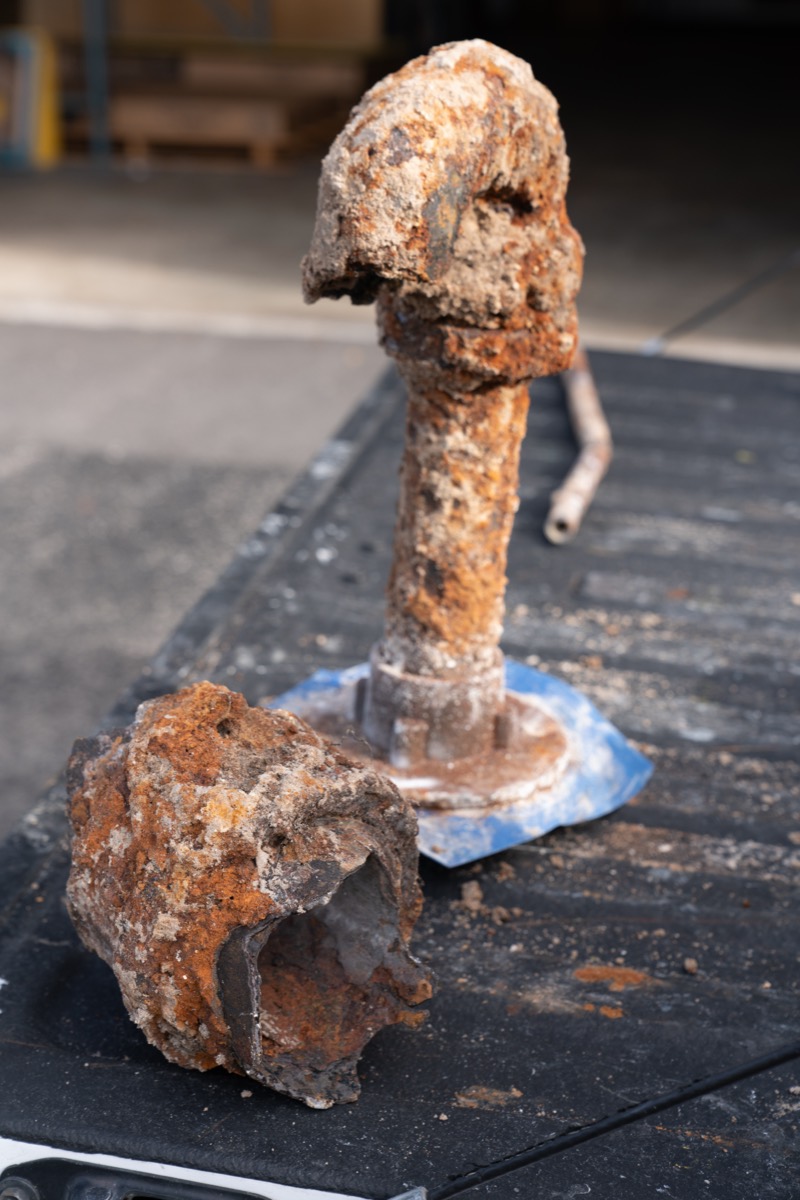
Galvanized steel is found in older homes. It rusts from the inside, so the opening slowly closes until the pressure drops, the water turns rusty, and eventually the pipe leaks. Fixing one section rarely ends it, because the next section is the same age and in the same shape.
Copper has a long track record, but in some homes it develops pinhole leaks. One pinhole is a repair. A new one every few months is a pattern, and patterns are what a repipe solves.
Many Florida homeowners first hear about their pipes from a 4-point inspection, the report insurers commonly ask for on older homes. Its plumbing section records what the pipes are made of (galvanized and polybutylene are both on the list) and whether the piping is original, partly re-piped or completely re-piped. It also asks about active or past leaks and the condition of the water heater, fixtures and shutoff valves.
What your insurer does with the report is between you and your insurer. What we can do is tell you plainly what you have, fix the items that were flagged, and, if a repipe is the right answer, do it with a permit and describe the work on your invoice so the next inspection has a clear record.
One leak doesn't mean you need new pipes, and anyone who quotes a whole-house repipe off a single pinhole should be able to explain why. When we make the call, we look at the same things every time:
Sometimes the answer is a repair. Sometimes it's a partial repipe: replacing one run, like the lines to the water heater or the section feeding one bathroom. And sometimes the whole house is the honest answer. We do all three, and you'll hear the reasoning before you see a number. Our plumbers are paid hourly, not on commission, so the size of the job doesn't change their paycheck.
License and gas certification, pipe materials, warranty — the difference between a plumber who finds the real problem and one who just sells inventory.
Most repipes today use one of two materials, and both are good choices when they're installed well.
PEX is a flexible plastic supply pipe. Because it bends, it can be pulled through walls and ceilings in long runs with fewer fittings and fewer holes, which usually makes the job faster and less disruptive. It doesn't corrode or develop pinholes the way metal pipe can. It has to be kept out of direct sunlight, so outdoor sections are protected or made in another material.
Copper has been used in homes for generations and holds up well in many houses. It's rigid, so it needs more fittings and usually more access to install, and in some homes it's the material that developed the pinholes in the first place.
We'll recommend a material for your house, explain why, and put it in your written quote, so you can compare like with like if you're getting more than one.
A whole-house repipe is a bigger project than a repair, but it's not a remodel. Here's what to expect.
Before: we look at the house, map where the lines run and give you a written quote that spells out the material, which fixtures and lines are included, and how long the work will take. A whole-house repipe usually takes more than one working day, and your quote will tell you how many to plan for. Partial repipes are often shorter.
During: we run the new lines through walls and ceilings and connect them to each fixture, the water heater and the main. That means cutting access holes in drywall, usually small ones at fixture walls and along the route. Your water will be off for parts of the work; we'll tell you when.
After: we test the new system and make sure every fixture has water. We're plumbers, not drywall finishers, so we don't patch the access holes. Plan on a drywall contractor afterward, and we'll tell you up front how many openings to expect so you can line one up.
Permits: repipes typically need a permit. We pull it, and the job isn't closed until it passes inspection. We never ask a homeowner to pull their own.
Repipe quotes are some of the hardest to compare, because two companies can quote very different jobs under the same name. We'll review another company's quote with you for free. Check that it tells you:
For the full list of questions to ask any plumber, see our guide to choosing a plumber. When you're ready, call (941) 778-0773 and tell us you'd like a second opinion.
We don't publish repipe prices, because the size of the house, the number of fixtures, the material and how the lines can be routed all change the job. The estimate is free, the price is in writing before any work starts, and our work carries a one-year workmanship warranty. If you'd rather spread out the cost, see our financing options.
How do I know if my house needs to be repiped?
Repeated leaks in different places, low pressure across the house, rusty water, and polybutylene or corroded galvanized pipe are the main signs. One leak on its own is usually a repair.
What is polybutylene pipe, and should I replace it?
Polybutylene is a gray plastic supply pipe used in many Florida homes built from the late 1970s to the mid-1990s. The 4-point inspection form asks about it by name. If you have it, we'll look at its condition and talk through replacing it.
Is PEX or copper better for a repipe?
Both work well when installed properly. PEX is flexible, needs fewer fittings and access holes, and doesn't develop pinholes. Copper is rigid and long-proven. We'll recommend one for your house and explain why.
How long does a whole-house repipe take?
Usually more than one working day, depending on the size of the house and the number of fixtures. Your written quote will say how long to plan for.
Will you patch the drywall after a repipe?
No. We cut the access holes we need and tell you up front how many to expect, but drywall patching is separate work by a drywall contractor.
Do I need a permit to repipe a house?
Repipes typically require one. We pull the permit and see the job through inspection.
Does a 4-point insurance inspection look at plumbing?
Yes. It records the pipe material, whether the house has been re-piped, any leaks, and the condition of the water heater, fixtures and shutoffs.
Do you do partial repipes?
Yes. Sometimes replacing one run, like the lines to the water heater or one bathroom, is the right answer, and we'll tell you when it is.
We've been working on houses around here since 1983, and everyone we send is an A&E employee. Call and tell us what's been happening. We'll come look at the pipes, tell you honestly whether it's a repair or a repipe, and put it in writing before anything starts. Air & Energy is a Florida Certified Plumbing Contractor, license CFC1429106.
Or request a free estimate online, and our office will call you back to set a time.