
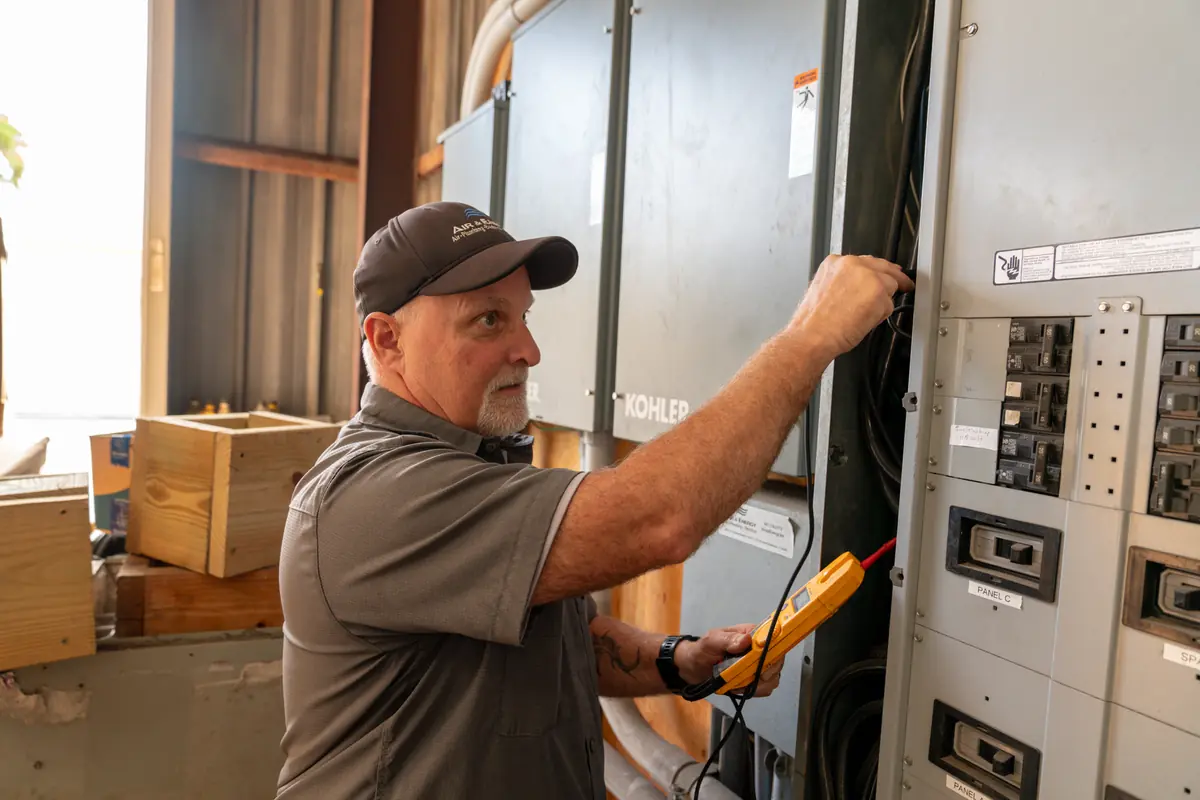
Whole-Home Surge Protection in Bradenton, FL
A surge protector at the panel guards the house; a second at the AC guards its compressor. You own it.

Where are you right now?
Most people think about surge protection either right after a storm or right before a big electrical job. Pick the one that sounds like you.
A storm or lightning just came through. Some outlets, lights or fans quit, or the AC won't start.
You want protection before the next one. What a whole-home surge protector does, and what it can't do.
You're replacing a panel or adding a generator. That's the easiest time to add one, and on a service replacement, code requires it.
You're comparing a monthly surge program. Ours is a one-time install you own.
A storm or lightning just came through
If you smell burning or see smoke, get out and call 911 first.
Otherwise, call us and tell us what stopped working. After a nearby strike, the pattern we see is uneven: one wall works and the next one doesn't, a few lights or fans are dead, a GFCI won't reset, or the AC won't start even though the rest of the house is fine. Don't keep resetting breakers that trip, and don't run anything that smells hot. We provide emergency service on nights and weekends. Outside office hours, your call goes to our automated on-call system, which our own technicians respond through. Calls after 9 p.m. are handled the next day.
If you're planning an insurance claim, tell us when you call, so the technician knows to note what was damaged and what was replaced. For other electrical problems, see electrical repair.
What a whole-home surge protector does
A whole-home surge protector mounts at your electrical panel and guards everything on those circuits: the AC, the refrigerator, the washer and dryer, the TV and the pool pump. Florida ranks at or near the top of the country for lightning every year, and nearly everything in a modern house now runs on a circuit board. Summer storms, nearby strikes and the power flickering off and on after an outage all send spikes down the line.
To be straight with you: no surge protector can stop a direct lightning strike. What a whole-home unit does is take the hit from the far more common surges that come in from storms and the grid, before they reach what's plugged in. Keep your plug-in surge strips for computers and TVs; the two work together.
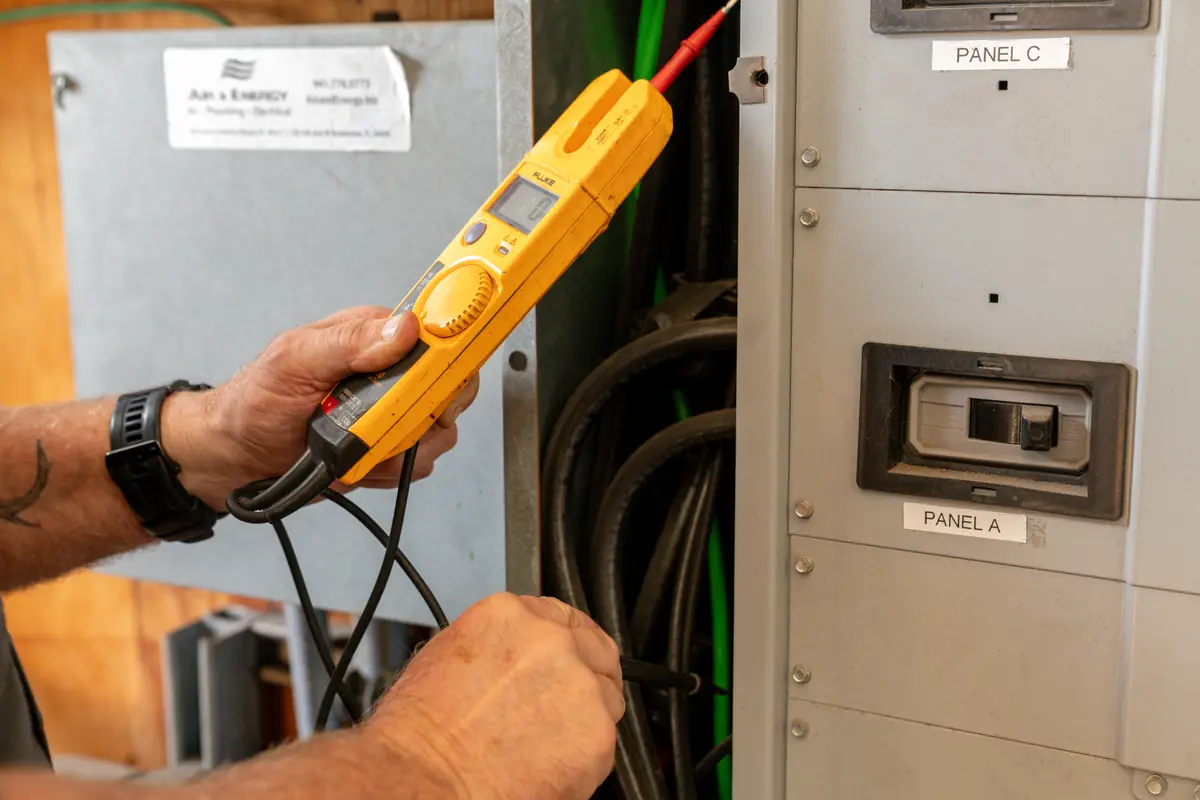
Here's what we install:
- A whole-home surge protector at the panel. At the panel we install Ditek's HD2, which handles up to 100,000 amps of surge per phase and has a light that tells you it's working. It's listed to UL 1449, the safety standard for surge protectors, and Ditek backs it with a five-year connected-equipment warranty (terms apply).
- AC surge protection. A second protector at the outdoor unit guards the compressor and circuit board right where they connect. Ditek's KG2 also watches the power going to your AC, shuts it off when the voltage runs too high or too low, and restarts it after a three-minute wait once the power has settled, so a pause after a flicker is the unit doing its job. Where surge-only protection fits better, we use Ditek's CM+.
- A grounding check. A surge protector sends the surge to ground, so it's only as good as the grounding. We check the home's grounding and upgrade it if it needs it.
Most installs take one visit. If your panel or grounding needs work first, we'll tell you before we start.
A one-time install you own, not a monthly rental
Some surge programs, including utility-run ones, put a device at your meter and bill you every month for as long as you keep it. Ours works differently. A whole-home surge protector from us is a one-time install, and you own it. You'll know the price for the model you choose before we start, and estimates are free. Ditek covers its HD2 panel unit with a five-year connected-equipment warranty and its CM+ outdoor-unit protector for three years, and every device carries Ditek's 10-year product warranty. That coverage sits behind your homeowners insurance and has conditions, including a plug-in protector on electronics and proper grounding, so we'll give you the written terms for the model you choose.
With a new panel or a generator
The easiest time to add surge protection is while we're already working at your panel. On a service replacement it isn't optional: under the 2020 National Electrical Code, which Florida enforces with the 8th edition Florida Building Code, a home's service needs a whole-home surge protective device whenever the service equipment is installed or replaced (NEC 230.67). See electrical panel upgrades and replacement.
The same goes for a whole-home standby generator. We're already at the panel and the transfer switch, and we often install a surge protector as part of a generator installation. See generator installation.
Who installs it
Air & Energy has served this area since 1983, and everyone we send is an A&E employee. We're a Florida Certified Electrical Contractor, license EC13011350. Every permit Florida requires is pulled, inspected and closed by us, and our work is covered by our one-year workmanship warranty. That's part of the Simply Better Promise. Before you hire anyone, our guide to choosing an electrician in Manatee County lists the questions worth asking.
Common questions
Is a whole-house surge protector worth it in Florida?
For most Florida homes, yes. It protects the expensive things that run on circuit boards, like the AC, the refrigerator and the washer, from the everyday surges that come in from storms and the grid.
Is a whole-home surge protector required by code in Florida?
When a home's service equipment is installed or replaced, yes. The 2020 National Electrical Code, enforced in Florida with the 8th edition Florida Building Code since December 31, 2023, requires one (NEC 230.67). A home that isn't changing its service isn't required to add one.
Will it protect my house from a direct lightning strike?
No. Nothing at the panel can stop a direct strike. It handles the far more common surges that travel in over the power lines from storms and the grid. Ditek's equipment warranty doesn't pay for direct or nearby lightning damage, so read the terms with us if lightning is your worry.
Is there a monthly fee?
No. It's a one-time install, and you own the device. How that compares to monthly programs.
What's the difference between a whole-home surge protector and a power strip?
The whole-home unit stops surges coming in from outside, at the panel, for every circuit. A plug-in strip protects only what's plugged into it. Use both.
Can you protect my AC?
Yes. Your panel protector guards the house, and a second protector at the outdoor unit guards the compressor and circuit board right where they connect. We use a voltage-monitoring unit that switches the AC off when power runs too high or too low, or a surge-only unit when that's the better fit, and we'll tell you which one your system calls for.
Some of my outlets stopped working after a storm. What should I do?
If anything smells hot or there's smoke, get out and call 911. Otherwise, stop resetting breakers and call an electrician. What we look for after a storm.
How long does installation take?
Most installs take one visit. If the panel or grounding needs work first, we'll tell you up front.
Do you serve Lakewood Ranch?
All of Lakewood Ranch, including the Sarasota County side, plus Bradenton, Palmetto, Ellenton, Parrish and the rest of Manatee County.
Protect the whole house
Call to talk it through, or tell us what stopped working after the last storm. Call (941) 778-0773 or request a surge protection estimate online.
15 questions every homeowner should ask an electrician
Panel upgrades, insurance-flagged panels, surge protection, code compliance — the things that separate a safe install from a costly one.