
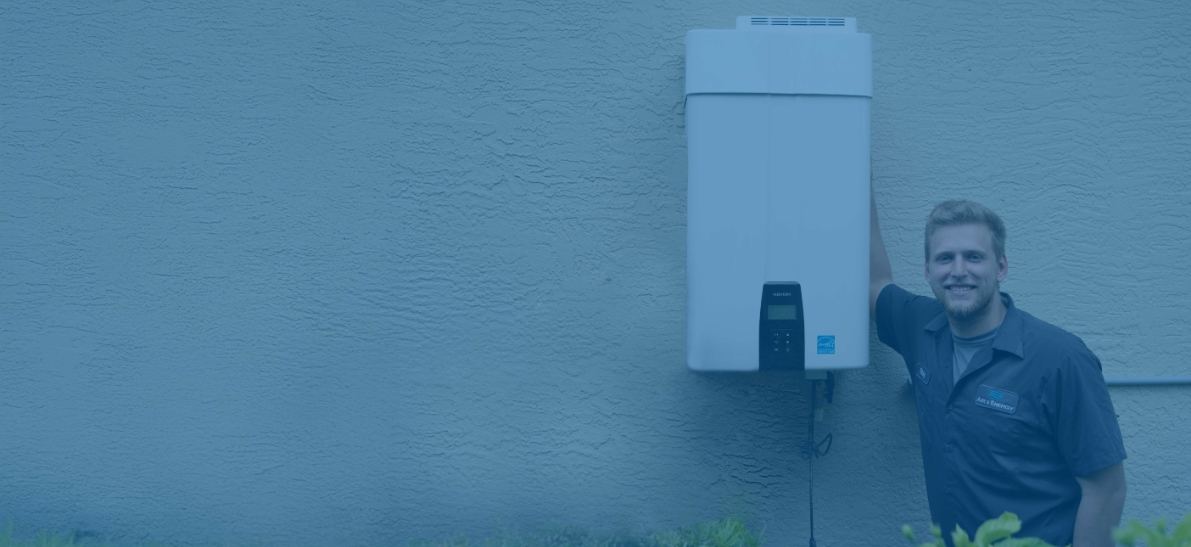
Tankless water heater installation in Bradenton: will it keep up, what the conversion needs, what to ask.

A tankless water heater heats water as it flows through the unit rather than keeping a tank hot between uses. Start with what needs hot water at the same time in your house.
A shower, dishwasher, and laundry can all be perfectly reasonable plans for the same evening. A tankless unit still has a finite simultaneous-flow capacity, so the assessment starts with those overlapping habits—not just bathroom count or square footage.
Not just because the heater is tankless. The unit can heat water on demand, but the cooled water already in the pipes still has to move before hot water reaches the shower or sink. The route and distance matter there. Some of the gas tankless units we install have a built-in recirculation pump, which can shorten that wait. Whether it helps in your house depends on how the plumbing is laid out, so ask about it at the visit.
License and gas certification, pipe materials, warranty — the difference between a plumber who finds the real problem and one who just sells inventory.
For gas tankless equipment, gas supply, electrical connection, venting, and location all need review. For an electric tankless conversion, the assessment should compare the home’s existing electrical service with the selected model’s installation requirements. The existing system is a starting point, not a green light. Some homes are a straightforward fit; others may need changes before one makes sense.
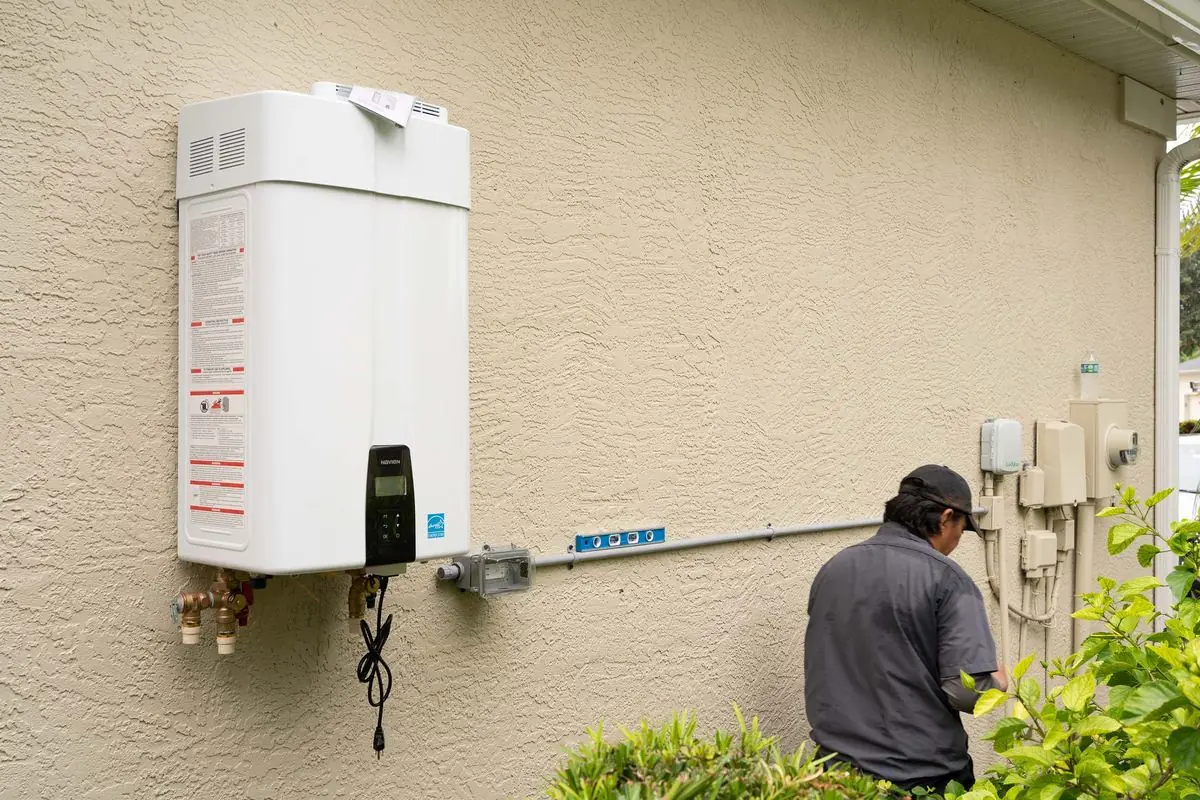
A few details help: whether the current heater is gas or electric and where it sits; which fixtures need hot water at the same time; and whether this is a planned replacement or a heater that has stopped cooperating. You do not need a model number to start the conversation.
Once a specific unit is on the table, its manufacturer instructions should guide service requirements and water-quality considerations. Depending on the selected model and the home’s water quality, scale prevention or descaling may be worth discussing. That keeps the conversation tied to the equipment and the home’s water—not a one-size-fits-all calendar. Our tankless installs normally include a set of isolation valves, the service ports used to flush scale out of the unit, and descaling is work we do on service calls. How often it's worth doing depends on the model and your water.
Air & Energy plumbers install both gas and electric tankless water heaters, in a marked truck, on our payroll; we don't subcontract. When a conversion needs a new circuit or other electrical work, our own electricians do it, so it stays one job. If the job needs a permit, we pull it and close it. The estimate is free, and your price is in writing before any work starts.
Air & Energy holds Florida plumbing and gas certification under one company license, CFC1429106. We cover Bradenton, all of Lakewood Ranch including the Sarasota County side, Parrish, Palmetto, Ellenton and the rest of Manatee County.
If the conversion work outweighs what you want from the new system, a tank replacement may be the sensible answer. For the broader comparison, read Tank or Tankless Water Heater?. For a general replacement conversation, visit Water Heater Installation; for a repair question, see Plumbing Repair. Ready to discuss the setup at your house? Call (941) 778-0773 or request a water-heater visit.